Robert Retirees
183 reading now Launch promo ends in 00:27:42

— Real retirees · Real numbers —

Does any of this sound familiar?

“I’ll just claim at 62.” “The market will come back.” “My accountant handles the taxes.” “We’ll figure out care if it happens.” Every story on this page came from someone who had already retired. Here is the first one.

Retiree sitting alone and thinking through his retirement choices
Frank ran the survivor numbers, not just the break-even numbers — Chapter 8.
Frank R.★★★★★
✓ Verified buyer
“I claimed at 62. My wife is the one who paid for it.”

I took Social Security the month I turned 62 because the cheque was there and I was tired. Nobody sat me down and explained that my benefit was the one that becomes my wife’s survivor benefit if I go first. Chapter 8 walks through that maths in about four pages. I ran it, saw that delaying to 70 raised her floor for the rest of her life by roughly $840 a month, and I suspended and repaid within the twelve-month window. That was the single most valuable afternoon of my retirement.

Frank R. · Scottsdale, AZRestored ~$840/mo of survivor income
Get the same book Frank used — $9.99 →

— The retirement income guide —

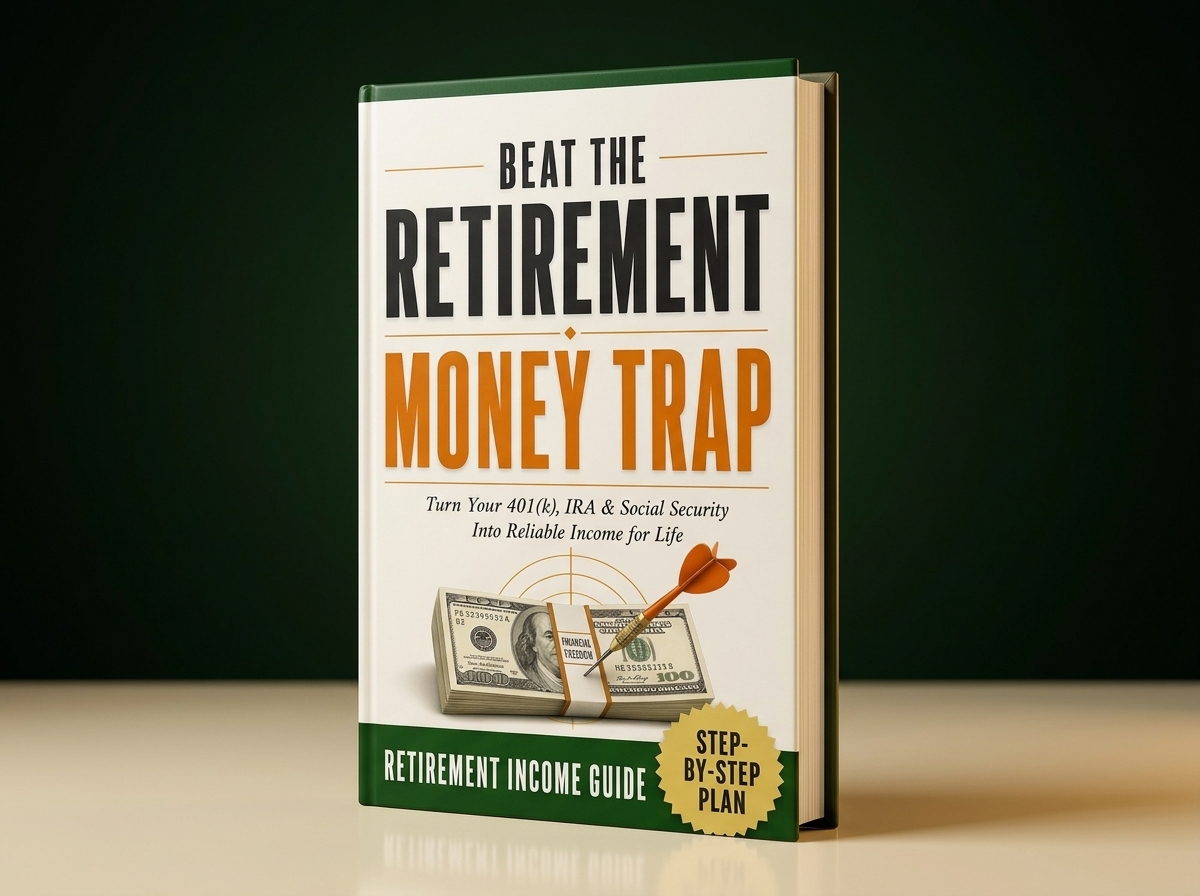
Beat the Retirement Money Trap

How to Turn Your 401(k), IRA and Social Security Into Reliable Income for Life — Without Running Out of Money, Overpaying Taxes or Sacrificing the Retirement You Worked So Hard to Build

★★★★★2,140+ readers98.4% satisfaction⌄ Instant PDF
Get the eBook — $9.99 →

Instant PDF · phone, tablet & computer · yours forever · 7-day guarantee

Beat the Retirement Money Trap book cover

— Reader case study —

Retiree reviewing paperwork and worried about a market downturn
Selling in a falling market is not a loss you recover from later — Chapter 9.
Barbara N.★★★★★
✓ Verified buyer
“I retired in January. By March the market was down 22% and I was selling into it.”

I had no cash buffer. Every withdrawal meant selling funds at whatever the price was that morning, and in a falling market that is how you permanently destroy a portfolio. Chapter 9 calls it sequence-of-returns risk and it is the reason I now keep two years of essential spending completely outside the market. I stopped selling, lived off the buffer for fourteen months, and my balance recovered. If I had kept withdrawing the way I started, the maths says I would have run out around age 84.

Barbara N. · Naperville, ILTwo-year cash buffer · stopped selling at the bottom
Get the same book Barbara used — $9.99 →

— Everything included —

14 chapters. 5 worksheets. One income system. $9.99 today.

130 pages

Six parts, fourteen chapters

20+ worksheets

Fill them in as you read

Instant PDF

Phone, tablet & computer

7-day guarantee

Full refund, no questions

“The goal is not to die with the largest possible account balance. It is to turn what you already have into income that does not run out.”

A big balance is not a retirement plan. The retirees who get into trouble are almost never the ones who saved too little — they are the ones who withdrew in the wrong order, claimed at the wrong age, converted too late, or never wrote down what they would do when the market fell.

— Reader case study —

Retired woman looking outside and thinking about taxes
The conversion window opens the day you retire and closes at 73 — Chapter 7.
Dennis W.★★★★★
✓ Verified buyer
“My tax bill didn’t go down when I retired. At 73 it nearly doubled.”

Everything I owned was in a traditional 401(k), which felt clever for thirty years. Then the required distributions started, and they pushed me into a higher bracket, made most of my Social Security taxable, and triggered an income-related Medicare surcharge I had never heard of. Chapter 7 explains the conversion window — the low-income years between retiring and 73 when you can move money to Roth cheaply. I had eight of those years. I used none of them. I am converting what I can now and it is costing me far more than it needed to.

Dennis W. · Raleigh, NCNow running a multi-year conversion plan
Get the same book Dennis used — $9.99 →

— Before you touch a single account —

What this actually looks like at your kitchen table

No advisor, no software, no jargon. Four habits that turn a pile of accounts into a paycheque you can count on.

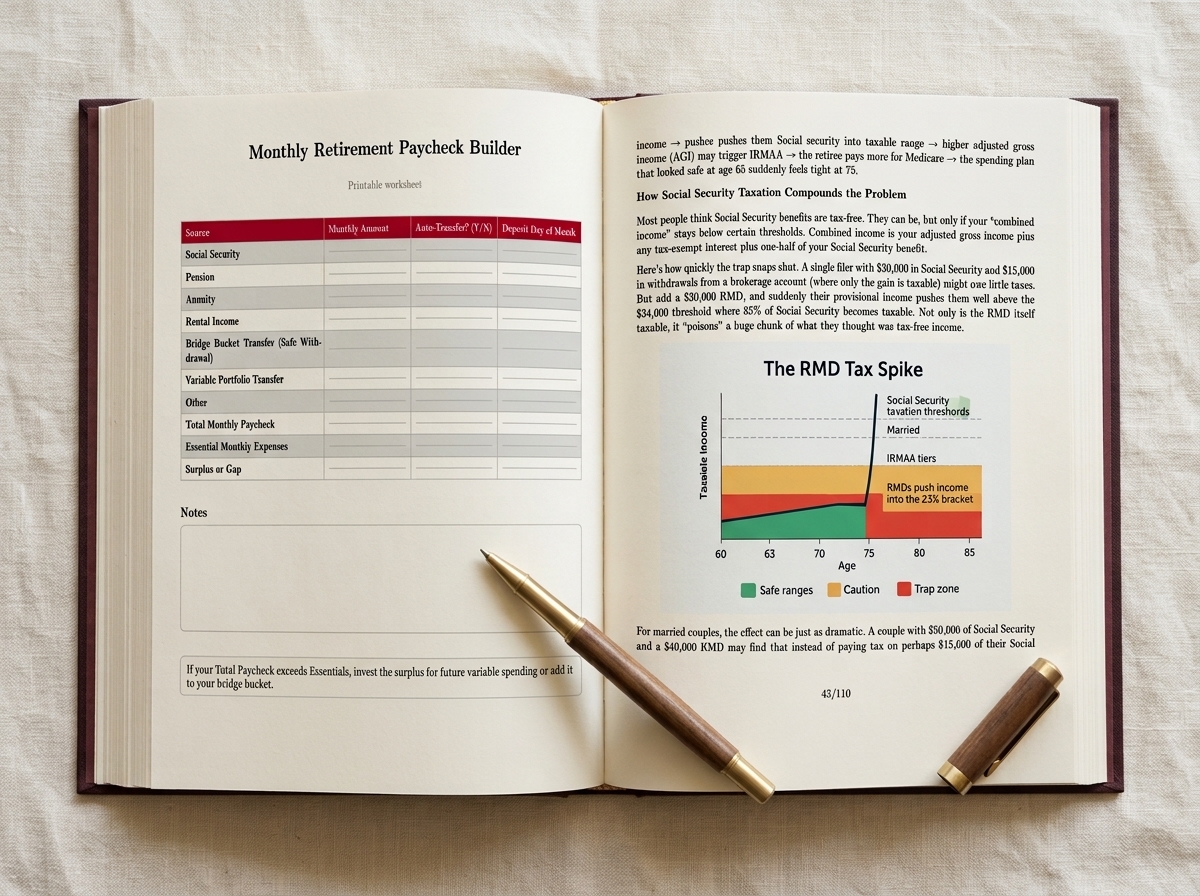
Printed retirement worksheet with figures and a pen
01

Write down your five numbers

Monthly essential expenses. Guaranteed monthly income. Total account balances. Annual withdrawal requirement. Healthcare reserve. Chapter 2 turns retirement from a fog of anxiety into five figures on one page — and the gap between numbers one and two is the only number that actually matters.

Handwritten retirement income plan on a notepad
02

Build the paycheque before you need it

An automatic monthly transfer that lands in your current account on the same day every month, funded by an income floor for essentials and a flexible layer above it. Chapter 3. Living directly off a fluctuating balance is what makes retirees panic; a fixed monthly deposit is what stops them.

Three folders representing retirement accounts and tax choices
03

Map the withdrawal order

Taxable, then traditional, then Roth — except when it isn’t. Chapter 5 shows how the account you draw from can cost or save more than the amount you draw, and how it collides with Social Security, Medicare premiums and your surviving spouse’s tax bracket.

Phone showing a banking app beside retirement paperwork
04

Write the crash plan while markets are calm

Exactly which expenses get cut, in what order, and how many months of cash sit outside the market. Chapter 9. Every retiree who sold at the bottom did it because they had not decided in advance — a written plan is the whole defence.

— Look inside —

Look inside

14 chapters across 6 parts, plus 5 worksheet appendices you can print.

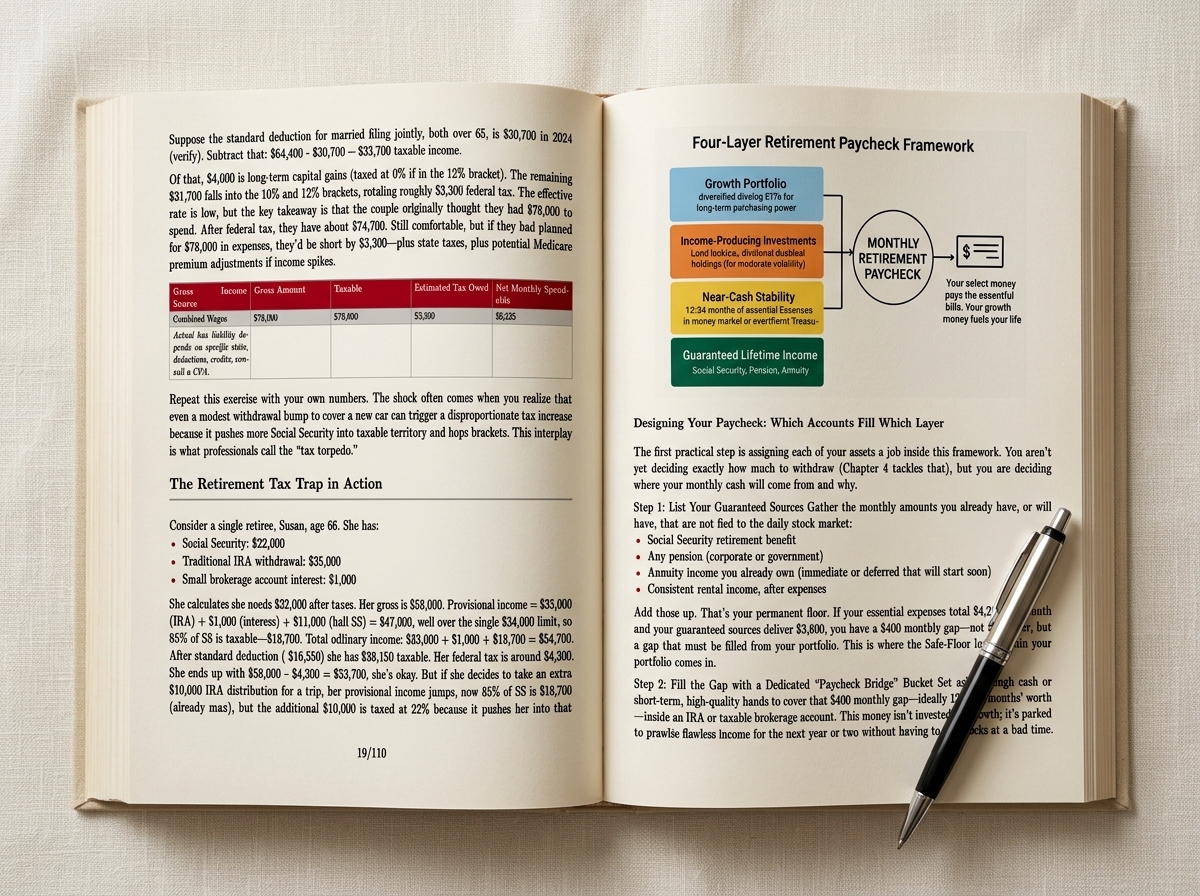
Inside page of the retirement guide
Inside the guide
Open book and retirement planning notes
Complete guide
Retirement ebook on laptop, tablet and phone
Reads on any device
  1. IYour Retirement Number Is Probably Wrong
  2. IIThe Five Numbers You Must Know Before You Retire
  3. IIITurn Your Savings Into a Paycheque That Lasts
  4. IVHow Much Can You Safely Withdraw?
  5. VThe Right Order to Use Your Accounts
  6. VIThe Retirement Tax Trap
  7. VIIThe Roth Conversion Window
  8. VIIISocial Security: 62, Full Retirement Age or 70?
  9. IXHow to Survive a Market Crash After Retiring
  10. XInflation, Housing and the Expenses That Break Retirement Plans
  11. XIHealthcare, Medicare and the Long-Term Care Problem
  12. XIIProtect Your Spouse, Family and Legacy
  13. XIIIStop Being Afraid to Spend Your Own Money
  14. XIVYour 12-Month Retirement Action Plan

— Included free with the complete guide —

  • The One-Page Retirement Income Plan
  • The Retirement Account Inventory
  • The Annual Retirement Review Checklist
  • Questions to Ask a Financial Professional
  • The Retirement Red-Flag Checklist

— Reader case study —

Older couple walking together beside the coast
Chapter 13 exists because underspending is also a way to lose the retirement you built.
Marilyn K.★★★★★
✓ Verified buyer
“We had $1.3 million and I was afraid to book a hotel.”

Forty-one years of saving does something to your head. I could not make myself spend it, and my husband kept saying we should travel while we still could. Chapter 13 is the one I did not expect to need — it explains why lifelong savers freeze, and it gives you a guilt-free spending account with an actual number in it so the money has permission attached. We took the trip in the spring. He was diagnosed that October. I will never be able to explain what those months were worth.

Marilyn K. · Portland, MEBuilt a guilt-free spending plan
Get the same book Marilyn used — $9.99 →
★ Launch Special — 83% Off
Save $49.01
Beat the Retirement Money Trap ebook cover

Digital Edition

Beat the Retirement Money Trap

Complete eBook + all 5 printable worksheets

$59$9.99

SAVE $49.01 TODAY — LIMITED TIME

  • The five numbers that replace guesswork — and the one gap that decides whether your money lasts
  • How to build a monthly retirement paycheque that arrives automatically, from accounts you already own
  • The withdrawal order that quietly saves or costs tens of thousands in tax
  • The Roth conversion window — why it opens the day you retire and closes for good at 73
  • Social Security at 62, FRA or 70 — including the survivor maths most couples never run
  • A written market-crash plan, a healthcare reserve, and a long-term care decision framework
🔥 Only 47 copies left at this price
Get the eBook — $9.99 →

00:27:42 · Price returns to $59 when the timer hits zero

🔒 Secure checkout · Visa · Mastercard · PayPal · 7-day guarantee

This offer ends in

00
Hours
27
Min
42
Sec

When the timer hits zero, the price returns to $59.

— Reader case study —

Woman reviewing retirement paperwork at a kitchen table
Long-term care is a separate plan, not a line item — Chapter 11.
Alan P.★★★★★
✓ Verified buyer
“Memory care was $9,200 a month. We had no plan for it at all.”

We had planned for everything except this. Chapter 11 separates health insurance, routine medical costs and long-term care into three different problems that need three different plans, and it says plainly that self-funding is a legitimate choice only if you have run the number. We had not run the number. Fourteen months in, we had spent through the reserve that was supposed to protect my mother for the next twenty years. The framework in that chapter is what we used to restructure the rest of it.

Alan P. · Columbus, OHRestructured the care plan before the reserve ran out
Get the same book Alan used — $9.99 →
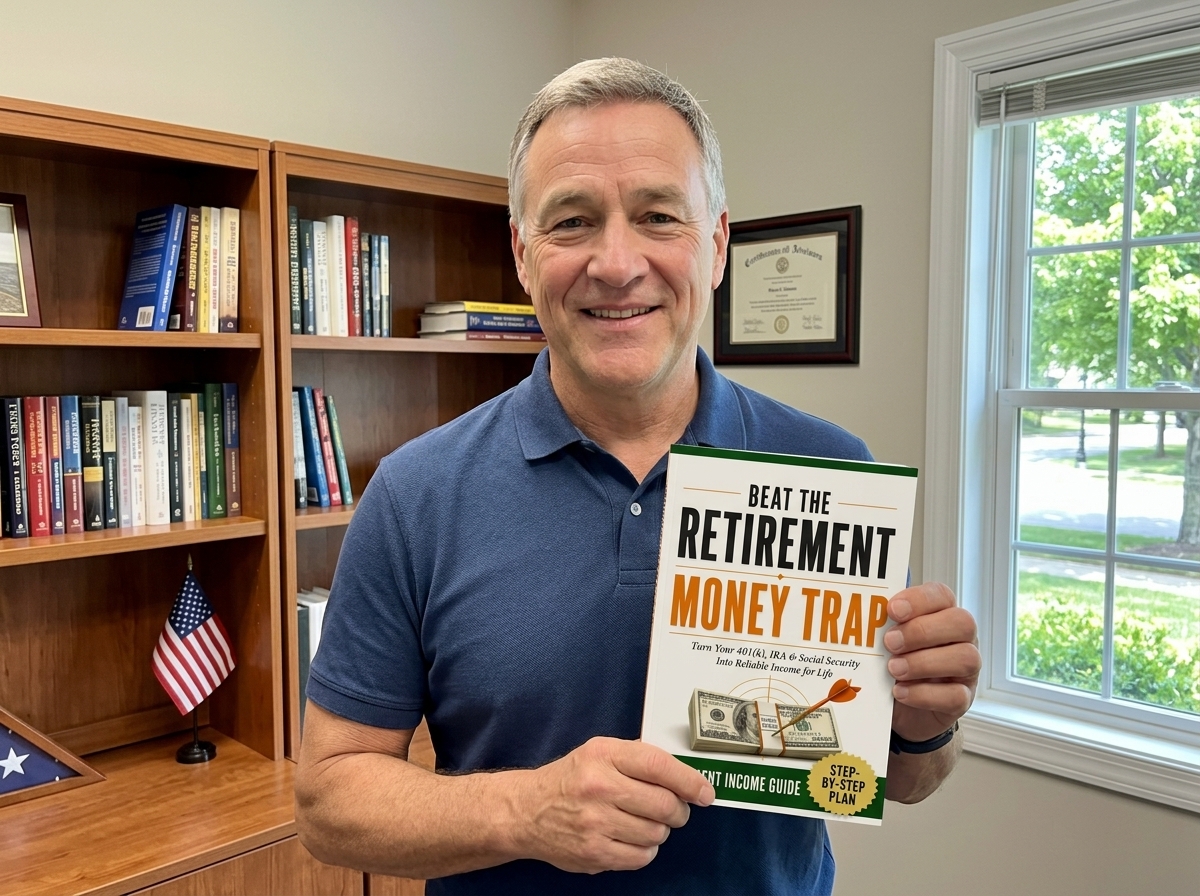
Michael, author of Beat the Retirement Money Trap

— Meet the author —

Meet the author

Michael

I spent a long time sitting across the table from people the week after they retired. The balance on the statement was almost never the problem. The problem was that nobody had ever shown them how to turn that balance into a payment that lands in their account on the first of every month.

What I kept seeing was the same handful of irreversible decisions, made quietly and made early. A Social Security claim filed without running the survivor numbers. A withdrawal order set on autopilot. A Roth conversion window that opened the day someone retired and closed at seventy-three while nobody was looking. None of it was dramatic. All of it was expensive.

So I wrote it down as a system rather than a lecture. Fourteen chapters, five worksheets, and a twelve-month plan you can work through one month at a time. It will not make you a financial professional. It will make you impossible to surprise.

— Everything you get today —

Everything you get today

The complete eBook — 14 chapters, 6 parts (PDF)$59
The One-Page Retirement Income Plan + Account Inventory$37
The Annual Review Checklist + Red-Flag Checklist$19
Questions to Ask a Financial Professional + 12-Month Action Calendar$12
TOTAL VALUE$127$9.99

— Reader case study —

Couple reviewing a retirement statement together
What household income looks like the month after — Chapter 12.
Judith A.★★★★★
✓ Verified buyer
“I took the bigger pension cheque. Six years later I was a widow with half the income.”

The single-life option paid about $410 a month more than the joint-and-survivor option, and at 64 that felt like free money. What nobody spelled out is that it ends completely on the day the pensioner dies. When my husband died I lost that pension entirely and one of our two Social Security payments in the same month. Chapter 12 has a survivor income worksheet that takes maybe twenty minutes. Twenty minutes, six years earlier, would have changed everything about my seventies.

Judith A. · Erie, PANow the worksheet she gives every friend
Get the same book Judith used — $9.99 →
7DAYS

— Your decision, protected —

Try it for 7 days. If it doesn’t help, you pay nothing.

Read it, fill in the five-number dashboard, and run your own Social Security comparison. If it doesn’t change how clearly you can see your own retirement — or it simply isn’t what was promised — email us within 7 days for a full refund. No forms, no runaround.

— Questions, answered —

Frequently asked questions

A good advisor is genuinely valuable, and this book will make you far better to work with. But most people meet their advisor once or twice a year and spend the rest of the time guessing. This gives you the vocabulary and the worksheets to ask sharper questions — about withdrawal sequencing, conversion windows, survivor benefits and fees — so the expertise you are already paying for gets pointed at the decisions that actually move the needle. Appendix D is literally a list of questions to ask them.

The opposite — the most valuable chapters are the ones you can only act on in advance. The Roth conversion window (Chapter 7), the Social Security coordination maths (Chapter 8) and the pension survivor decision (Chapter 12) are all doors that close permanently. Readers who find this book ten years out have every option available to them. Readers who find it at 74 have far fewer.

No. Withdrawal order, escrowed spending, guardrail withdrawal rates, healthcare reserves, long-term care planning, survivor protection and the permission to actually spend your money are all live decisions for as long as you are alive. Several chapters exist specifically for people already drawing income who suspect they are doing it in the wrong order.

The account names are American — 401(k), IRA, Roth, Social Security, Medicare. The underlying logic is not: every country has tax-deferred accounts, a state pension with a claiming-age decision, and a sequence-of-returns problem. If you are outside the US, the frameworks transfer cleanly but you will need to map the account types onto your own system.

Every chapter follows the same shape: the trap, why it happens, what it costs, the warning signs, what to do, what not to do, and a worksheet or calculation at the end. There are more than twenty fill-in tools. Most readers work through it with their actual account statements next to them.

An instant PDF download of the complete guide — 14 chapters across 6 parts, roughly 130 pages — plus all five printable appendices: the One-Page Retirement Income Plan, the Retirement Account Inventory, the Annual Review Checklist, the Questions to Ask a Financial Professional, and the Retirement Red-Flag Checklist. It reads on phone, tablet and computer, it’s yours permanently, there’s no subscription, and nothing ships.

The decisions are reversible today. In five years, most of them are not.

Download it in the next two minutes and fill in the five-number dashboard tonight. Every retiree on this page made one decision they could not take back — and every one of them could have run the numbers first, for free, in an afternoon.

Get the eBook — $9.99 →

One-time secure payment · instant PDF to your email

🔥 Price returns to $59 when the timer hits zero